Table of Contents
Your firm drafts the same documents over and over: engagement letters, NDAs, routine pleadings. Document automation software turns that repetitive drafting into a few clicks instead of an hour of copy-paste.
We compared the leading tools, including Clio Draft, Gavel, LEAP, Motionize, and Rally, on what each one actually does well, where it falls short, and what it costs.
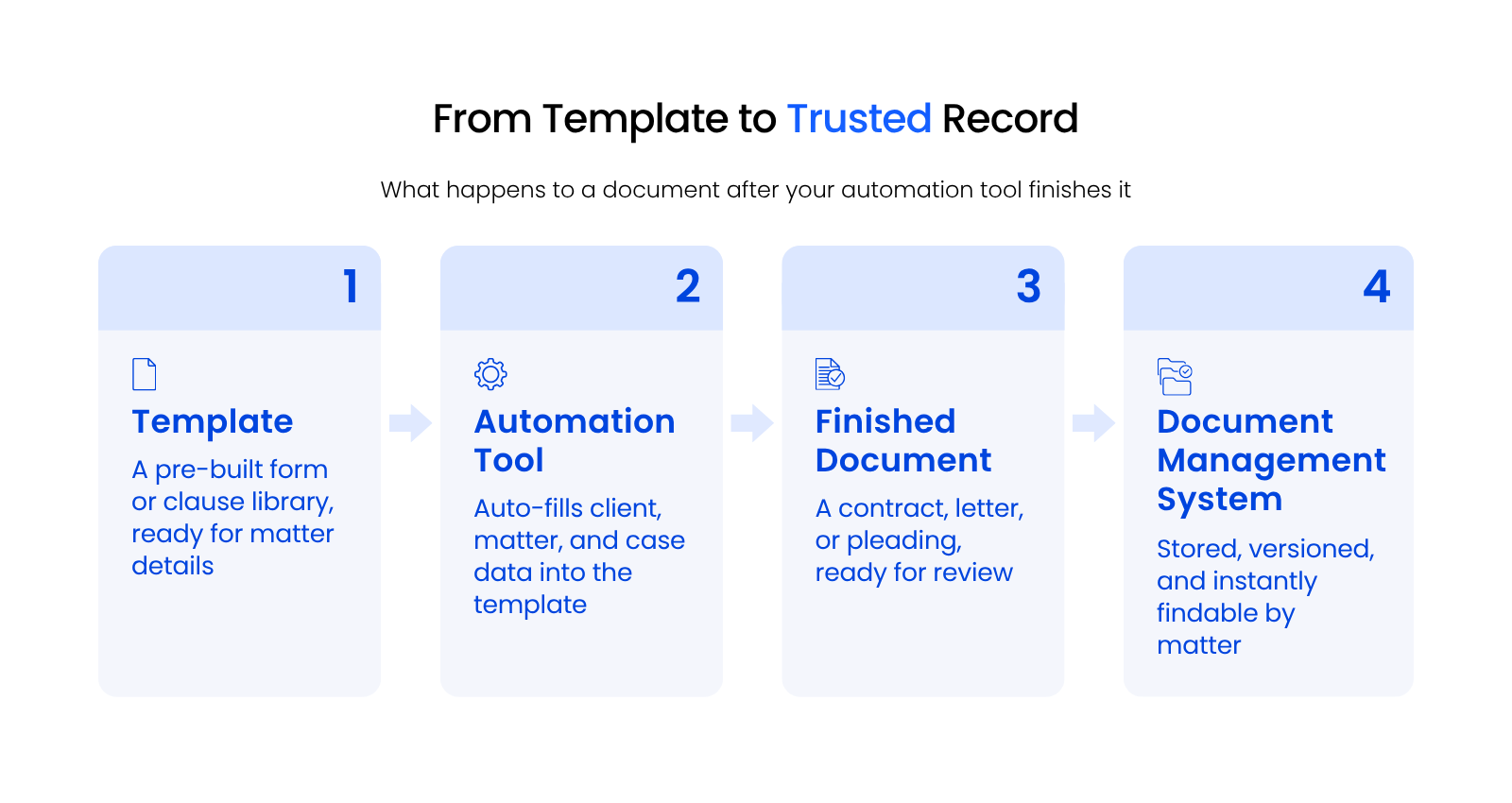
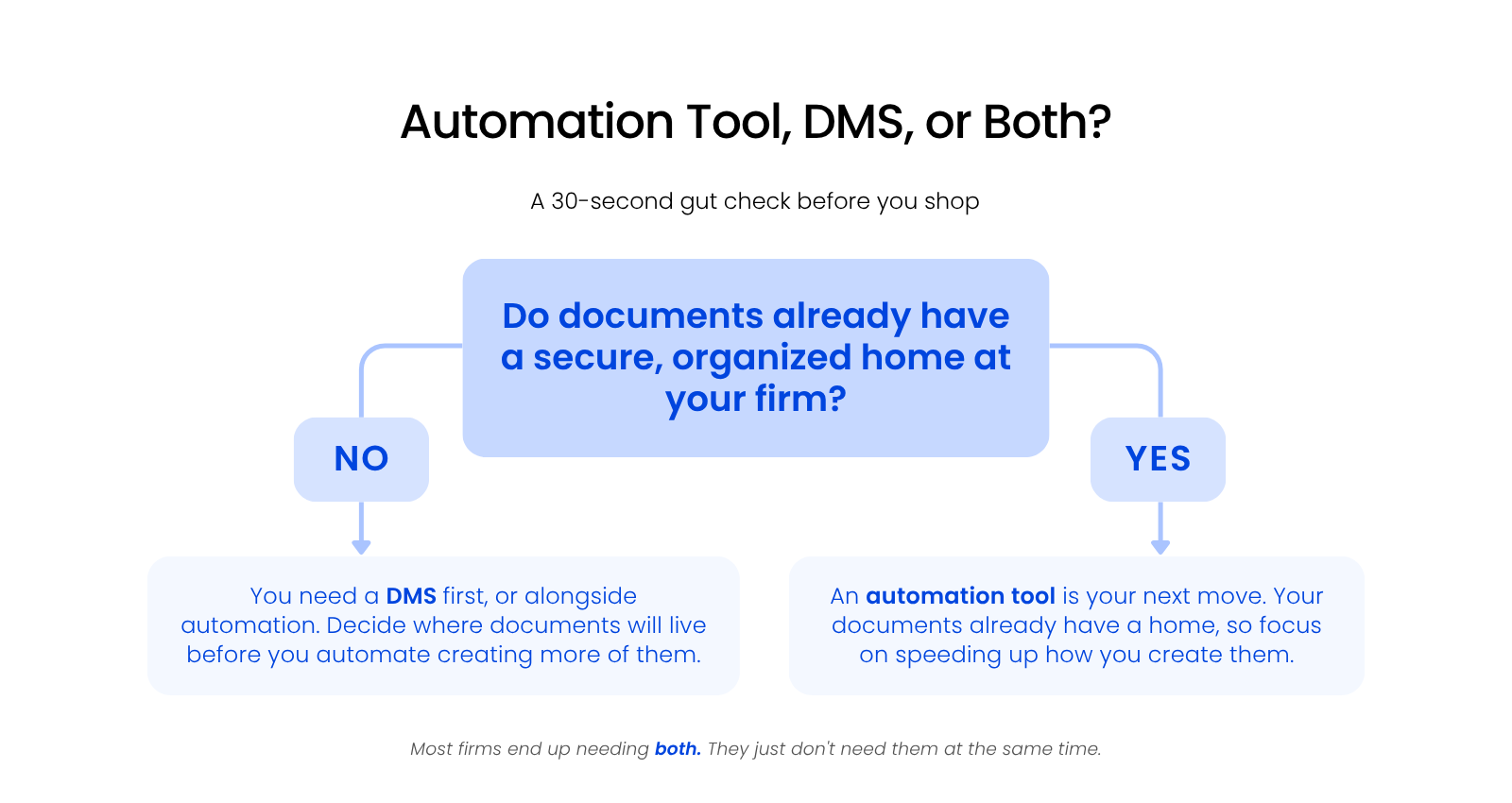
None of them replace a place to store, secure, and find your finished documents afterward. That’s the job of a legal document management platform, and most firms end up needing both.
This guide breaks down what each automation tool does best, what it costs, and how to know whether your firm also needs a dedicated system for what happens after a document gets drafted.
What Is Document Assembly/Automation Software?
Document automation software is a tool that auto-fills legal templates with client and matter data to produce a finished document without manual drafting. You’ll see “document automation” and “document assembly” used to describe the same core idea, though assembly sometimes refers more narrowly to combining clause libraries into a single document. These documents range from routine letters to full contracts and motions.
How Does Law Firm Document Automation Software Work?
The best document automation software for your firm uses templates and auto-population to generate legal documents automatically. Some platforms use automation engines that pre-fill documents with information already gathered during client intake.
Document automation software cuts the time your team spends drafting and frees them up for higher-value work. It also reduces the risk of manual entry errors that could create validity problems down the line.
Document Automation Software vs. Document Management Software
Document automation software and document management software solve different problems, even though firms often shop for both at the same time. Automation software creates documents: it’s what turns a blank template into a finished contract or letter. Document management software stores those documents afterward, keeping them secure, organized by matter, and easy to find months or years later. That split — creating documents versus storing them — is one seam in the larger world of legal document automation, cloud storage, and e-signature tools most firms end up piecing together.
A document automation tool with nowhere organized to send its output just relocates the drafting problem into a filing problem. That gap is exactly where AI-powered document management is changing what “afterward” can look like, and it’s why LexWorkplace shows up later in this guide alongside the automation tools themselves.
That distinction is worth keeping in mind through the rest of this guide, especially once LexWorkplace shows up in the product list below.
The Benefits of Document Assembly Software for Law Firms
The most obvious benefit of document automation software is time. Your team stops creating every legal document from scratch, which frees up hours for the work that actually needs a lawyer’s judgment.
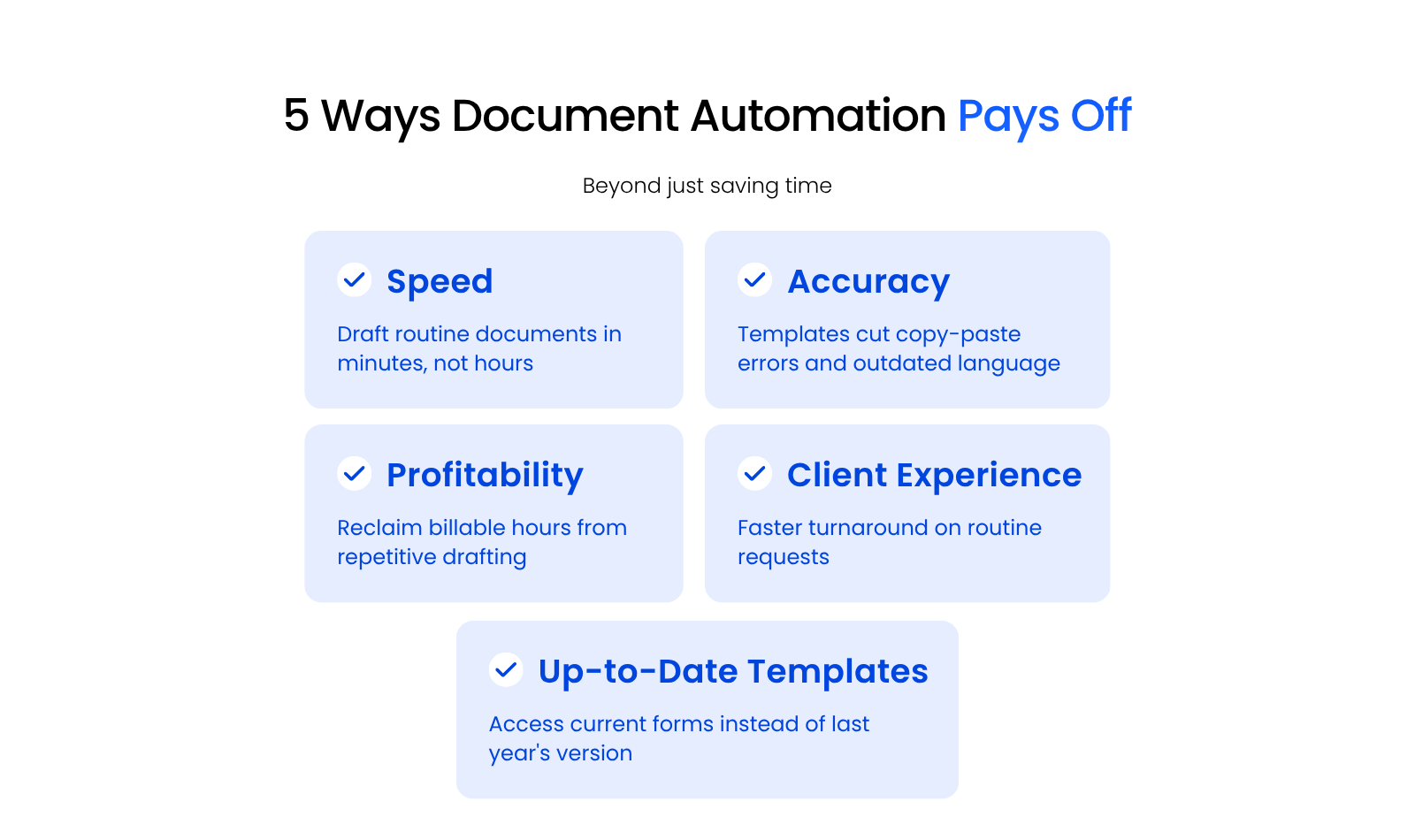
Time savings are just the start. Document automation software also:
None of these benefits require a bigger team, just the right tool handling the repetitive part of the work.

Key Features of Law Firm Document Automation Software
Document automation platforms pack in a lot of functionality, but a handful of features actually separate a genuinely useful tool from a glorified template folder.
Document Templates
Templates are the foundation of any document automation platform. They’re what let you build a document quickly instead of starting from a blank page every time.
Templates typically cover contracts, motions, pleadings, invoices, letters, memos, and due diligence documents. Most platforms let you edit templates freely, save your own versions for reuse, and search for the right one by matter type or jurisdiction.
Document Library
A document library is your firm’s collection of templates, ready to generate new documents on demand. Many platforms ship with thousands of jurisdiction-specific public forms already built in, on top of whatever templates your firm adds itself.
Document Storage
Automation software needs somewhere to keep its templates, and that storage should integrate with whatever document management or practice management tool your firm already runs. Look for a platform that lets you store an unlimited number of templates and push finished documents straight into your DMS or practice management system without extra steps.
Conditional Logic
Conditional logic is the “if this, then that” behind smarter automation. It lets a template change based on the details entered instead of generating the same static document every time.
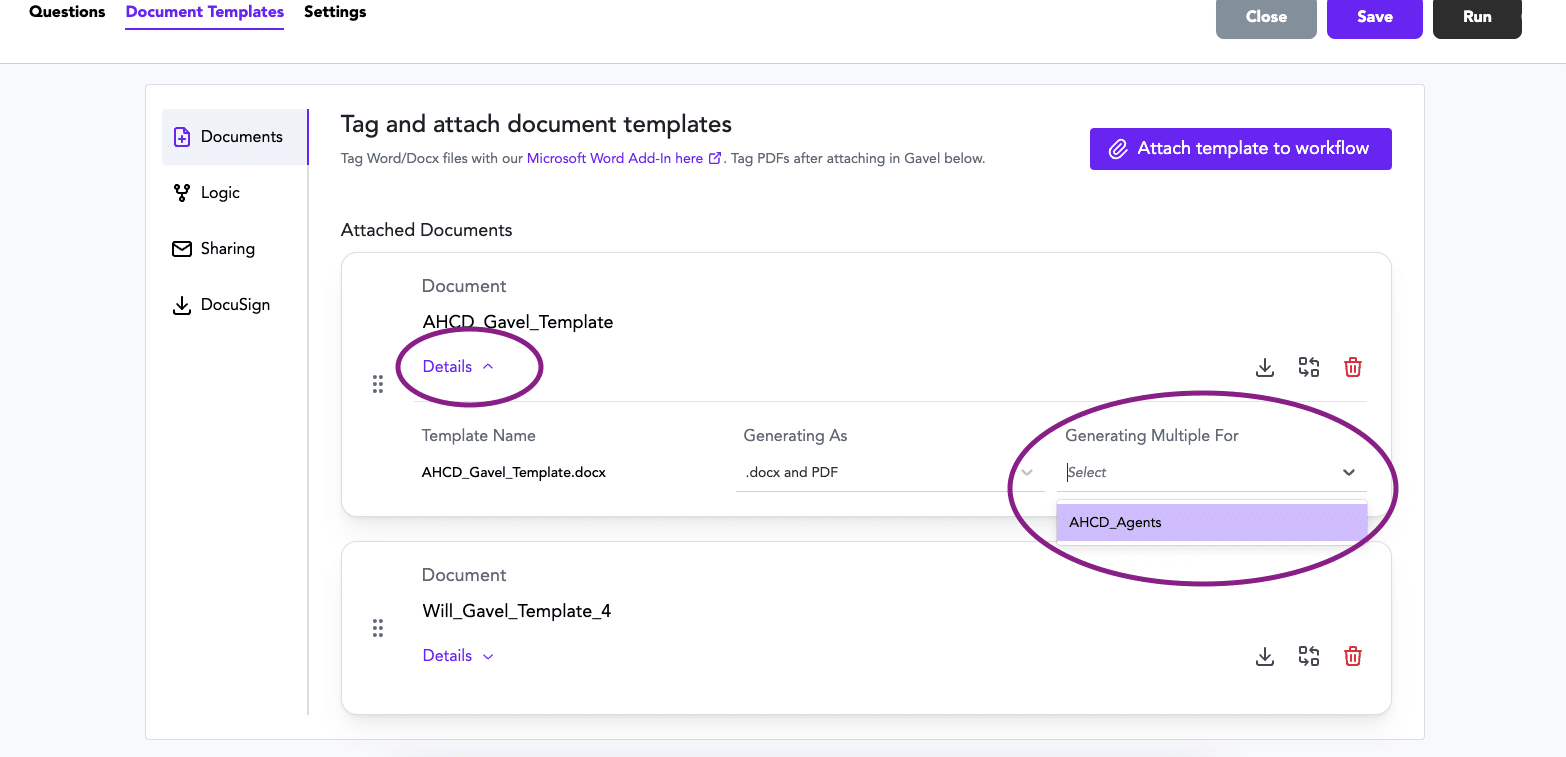
For example, if a client intake form mentions estate planning, the software can generate a last will and testament template automatically, no manual searching required. That kind of contextual logic is one of the areas AI for legal documents is moving fastest, and it’s worth watching closely if you’re evaluating tools today.
Auto-Population
Auto-population goes hand-in-hand with conditional logic. Instead of just generating the right template, it fills in client and matter data automatically, pulling from your practice management software or the automation platform’s own intake data.
That cuts duplicate data entry and keeps the information in your documents accurate.
Remote Access
Cloud-based automation tools, one piece of the broader move toward cloud-based law firm software, let your attorneys generate documents from any device, not just a workstation in the office. That matters more than it used to, since remote and hybrid work are now routine rather than the exception.
Electronic Signatures
Electronic signatures mean your clients don’t need to come into the office to sign a document. Some automation platforms build e-signature directly into the platform; others integrate with a third-party tool like DocuSign or RightSignature.
Either way, look for one that also tracks signature progress, so you know where a document stands without having to ask.
Software Integrations
Any automation tool you choose needs to work with the rest of your firm’s tech stack: your practice management software, your document management system, and whatever collaboration tools your team already relies on.
Most platforms integrate out of the box with tools like Microsoft 365 and Google Workspace, and some offer open APIs for anything more specific your firm runs.
Various File Types
Once a document is built, you’ll want to export it as a PDF or a Word file, depending on who you’re sharing it with.
Client Self-Service Portal
Some platforms include a self-service portal where clients fill out intake documents themselves, no office visit required. Client data collected through the portal can flow straight into your practice management software, so nobody has to re-enter it by hand.
Where AI Fits in Document Automation
AI has moved from a buzzword to a working part of how document automation software actually functions, and it shows up in three specific places worth understanding before you buy.
Clause generation is the most visible one. Instead of pulling a static clause from a library, AI-assisted tools draft new language on the fly based on the facts of a matter, then let an attorney review and adjust it before it goes out the door. It’s one of the fastest-moving areas in AI for drafting and reviewing legal documents, so it’s worth a close look if speed is why you’re evaluating tools in the first place.
Auto-population is where AI does its quietest work. Intake data your firm already collects, client name, matter type, key dates, flows straight into a draft without anyone re-typing it. The more structured your intake process, the more of a document AI can fill in before a human touches it.
Error flagging is the newest addition. AI is getting better at catching missing defined terms, inconsistent dates, and clauses that contradict each other elsewhere in the same document. It won’t catch everything, and it’s not a substitute for review, but it catches the kind of mistake a tired associate misses at 11pm.
Automation handles all three while a document is still being built. What happens after, storing it, searching it, keeping it secure, is a different job, and our guide to how to leverage AI in legal document management covers that side in depth.
How to Choose the Right Software
Choosing the right document automation software starts with mapping your firm’s actual workflow, then matching a tool to it, not the other way around.
Practice Management Features vs. Standalone Assembly Software
Start by deciding whether to use the automation tools built into your practice management software or a standalone platform instead. Map your firm’s actual workflow before you go shopping. Once you know what you actually need a tool to do, you can judge any platform, including your practice management software’s built-in option, against that instead of a generic feature list.
If your practice management software’s document assembly features aren’t strong enough for your firm’s workflow, a standalone tool is worth the extra cost.

Practice Management vs. DMS
How practice management software’s built-in document tools stack up against a dedicated document management system.
1. Does the Software Fit Your Current Tech Stack?
Look at what other software your firm already runs. The document automation tool you pick needs to integrate smoothly with those systems, including wherever your finished documents end up living afterward.
For example, if your firm uses a document management system, make sure your automation software can save generated documents there directly, or at least get them there in one or two steps instead of a manual upload.
2. Does the Software Have the Features Your Firm Needs?
The features you actually need depend on your firm’s size, workflow, and existing tech stack. If you already have an e-signature tool you like, built-in e-signature in your automation platform isn’t a must-have.
Make a list of must-have features and nice-to-haves, and get your paralegals and other team members involved. They’ll often flag needs you wouldn’t have thought of on your own.
3. Is the Software Within Your Budget?
Most document automation platforms charge a subscription fee, usually per user per month. Factor in both the subscription cost and whatever it takes to implement the software within your practice, not just the sticker price.
4. Is the Software Easy to Use?
Any tool you pick should make your team’s work easier, not harder, which means it needs to be usable without a steep learning curve.
Check whether the interface is intuitive, whether it plays well with your other software, whether the vendor offers real training, and whether support is built into the platform itself.
5. Is the Software Secure?
Document automation software has full access to your client’s confidential information, so security isn’t optional. Look for built-in encryption and two-factor authentication at minimum, and ask each vendor directly how they handle access and data protection.
6. Have You Taken a Test Drive?
Most vendors offer a trial, and it’s worth using. Once you’ve narrowed your list, test drive each option within your actual practice, not just a demo environment, and write down every friction point you hit along the way.
After the trial, you should have a clear read on which two or three tools are worth a final decision.

Best Legal Document Automation and Document Assembly Software
Choosing a document automation tool is only the first decision, since the finished documents still need a system to store, secure, and make them findable afterward. Here’s how the leading document automation and assembly tools for law firms compare, including where a document management system fits into the picture.
Document Automation Software Compared
| Product | Best For | Starting Price | Standout Feature |
|---|---|---|---|
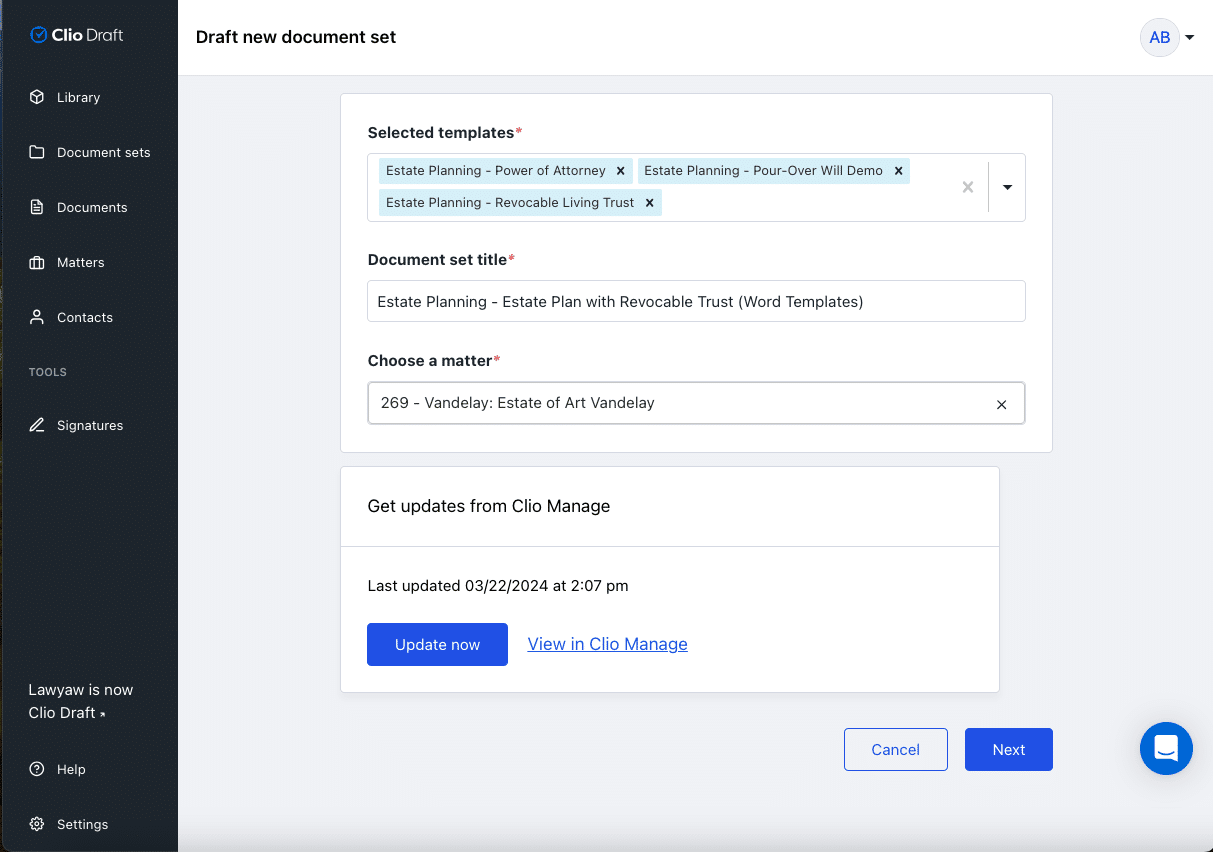
| Clio Draft | Firms already using Clio Manage | From $70/mo, single user (court forms only); up to $120/mo + $30/user for the full platform | Deep integration with Clio Manage |
| Gavel (formerly Documate) | Firms that also want client-facing intake forms | From $83/mo | Combines document assembly with an online form builder |
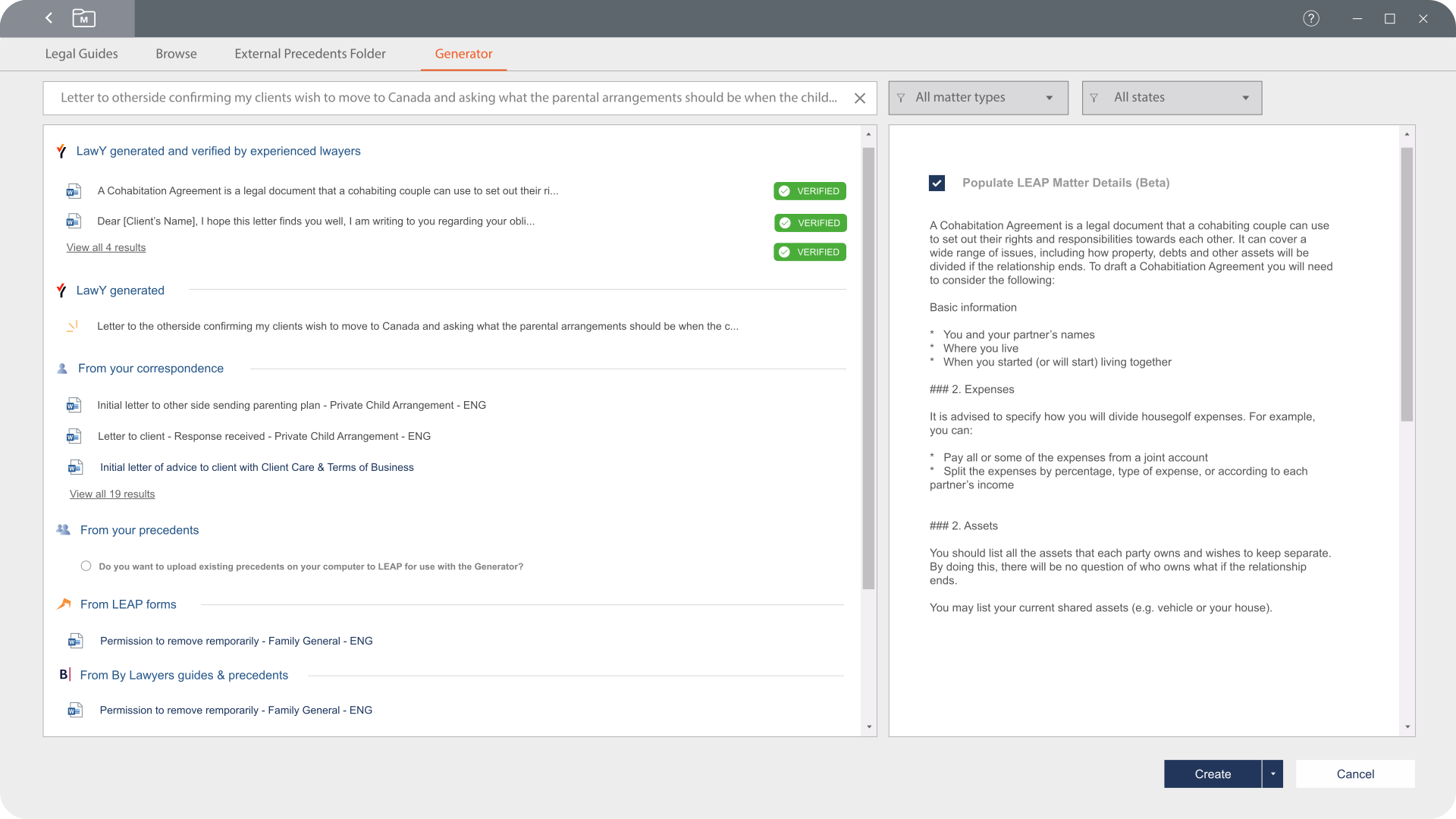
| LEAP | Firms that want automation built into full practice management | From $149/user/mo | Full practice management software with automation built in |
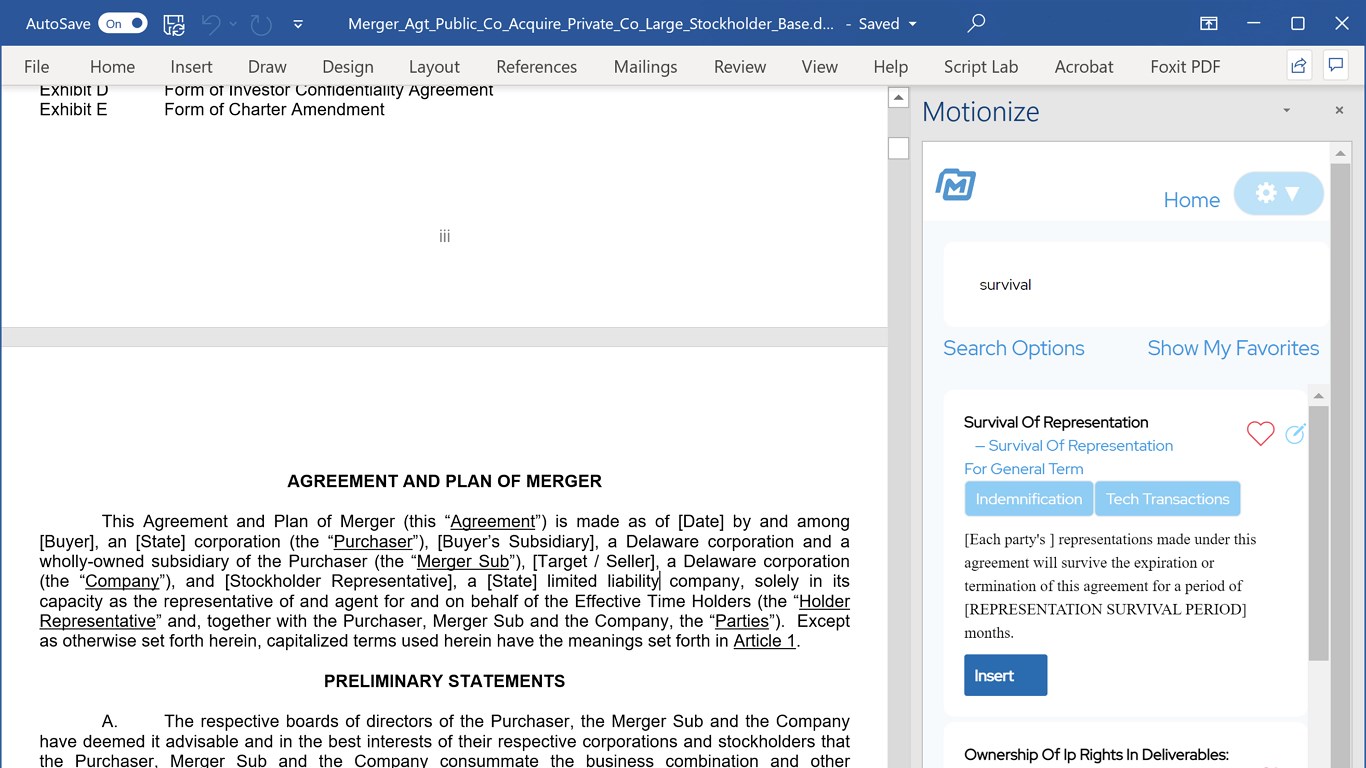
| Motionize | Solo and small firms drafting contracts inside Word | $25/mo solo, $50/mo team | Works as a Microsoft Word add-in |
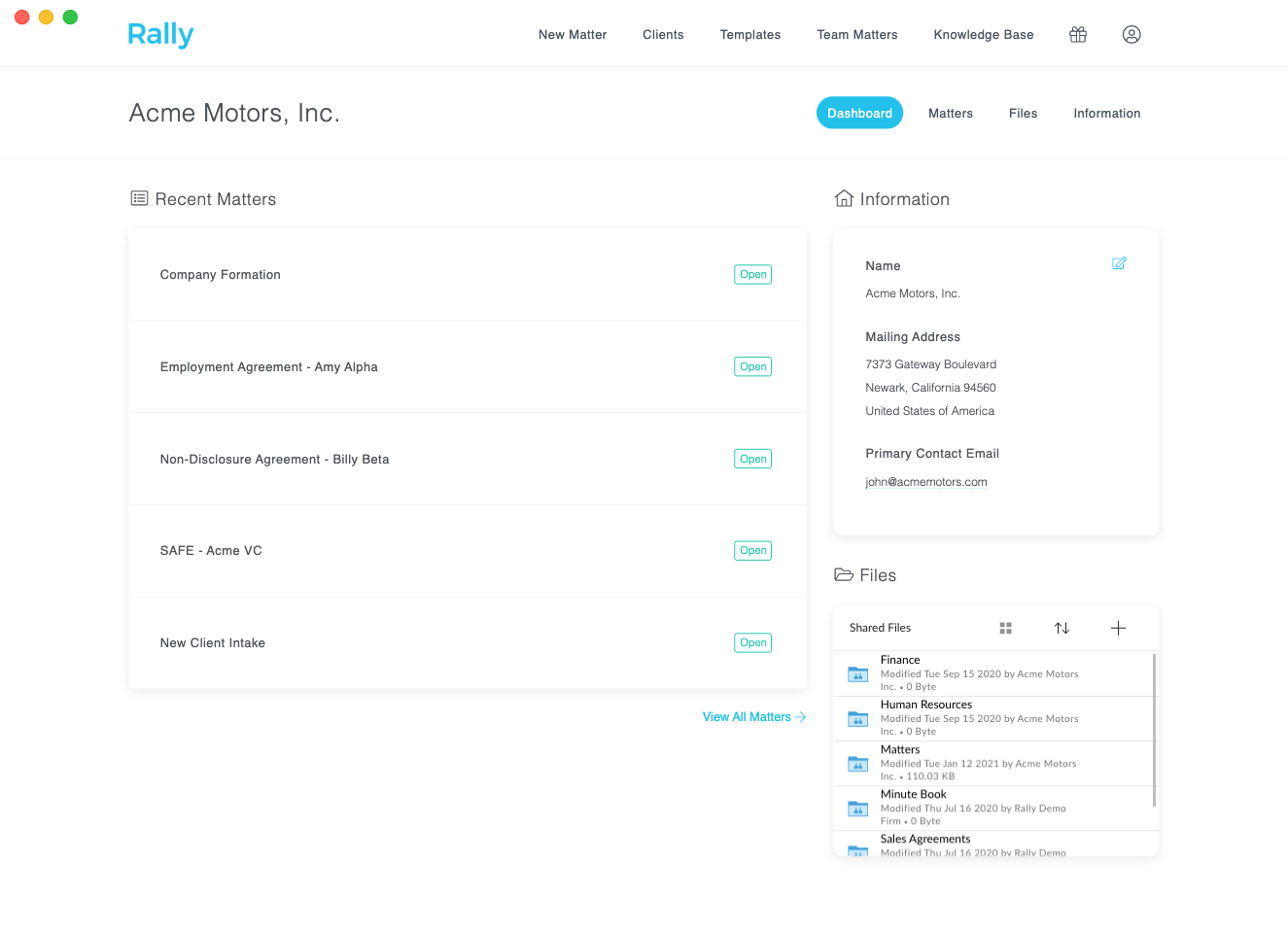
| Rally | Firms that want intake, automation, and contract management in one tool | $49/mo per additional user; base price not public — verify on Rally’s pricing page | Client intake feeds directly into document generation |
| LexWorkplace | Firms that also need a home for what they draft | From $395/mo | Matter-centric DMS with built-in AI and OCR |





That’s the full lineup of dedicated automation tools compared here. None of them are built to be where the documents live once they’re finished.
LexWorkplace — Best for Firms That Also Need a Home for What They Draft
None of the five tools above replace a place to store, secure, and find your documents once they’re finished, and that’s a different job than document automation solves. Even the best all-in-one legal software tends to do everything a little bit mediocre, which is why firms are usually better off pairing a strong tool for each specific job instead of hunting for one tool that does all of them.
That’s where LexWorkplace fits. It’s a document management system built specifically for law firms, designed to be where your automated documents live once a tool like the ones above finishes drafting them.

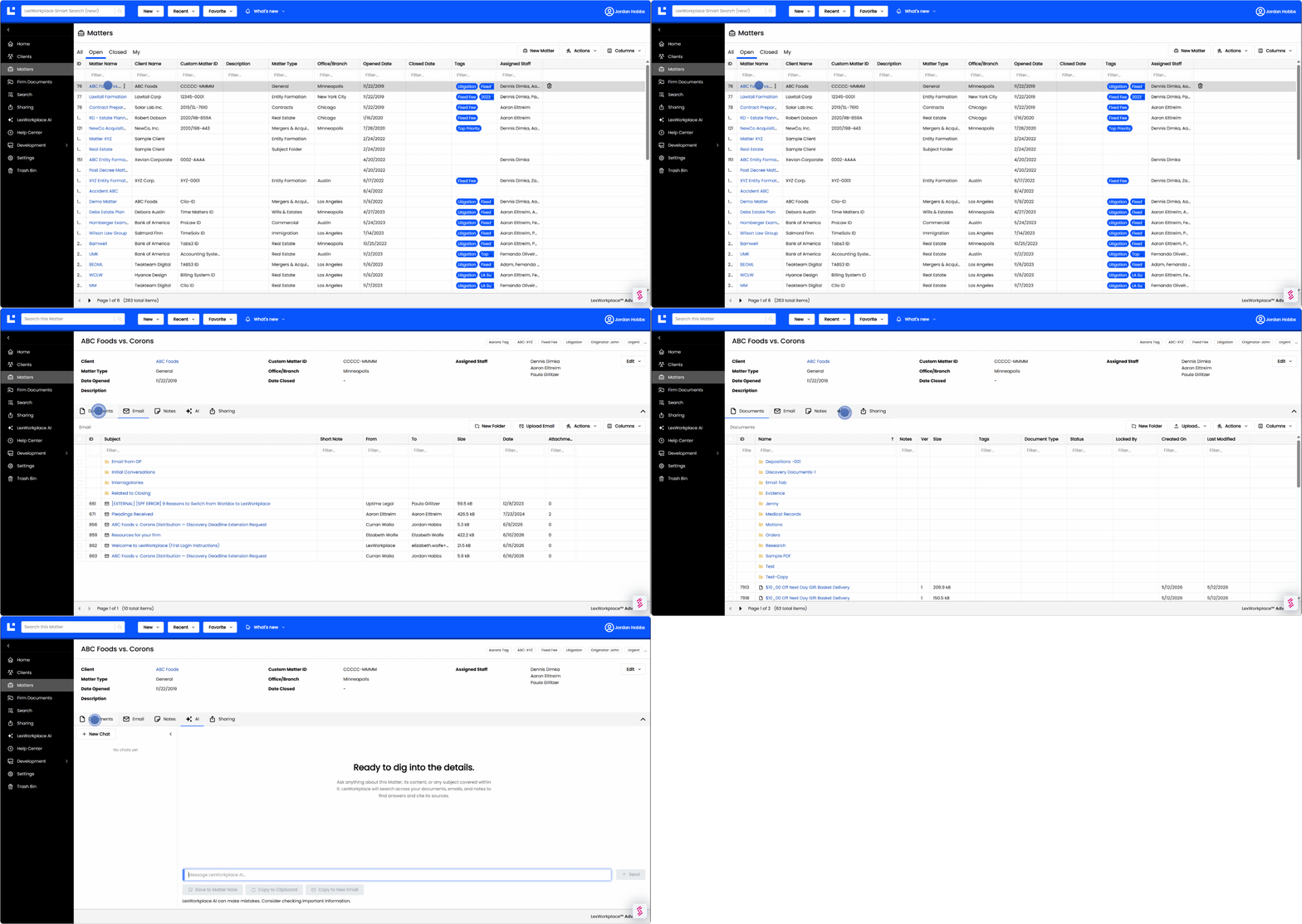
Give Your Automated Documents a Place to Live
Clio Draft, Gavel, LEAP, Motionize, and Rally each speed up the same repetitive drafting work in different ways, and the right pick depends on your firm’s size, budget, and existing tech stack. Whichever one you choose, it solves half the problem. The other half is what happens to the document once it’s finished: where it lives, who can find it, and whether it’s actually secure. Automation and document management do two different jobs, and solving for only one leaves half the problem untouched.
WHAT’S NEXT