

Table of Contents
Worldox has organized law firm documents for decades, and plenty of firms still run on it every day.
If you’re sizing it up in 2026, though, one fact now shapes the whole decision: Worldox is winding down on a published timeline.
This review gives you the honest version — what Worldox does well, where it falls short, what its end-of-life actually means, and where to start if you’re already weighing your Worldox alternatives.
Introduction to Legal Document Management
Before we get into Worldox specifically, it helps to be clear on what document management actually means.
A Document Management System (DMS) is software that helps a firm store, organize, and find its documents, emails, and other data. The scope varies from product to product, but most document management software shares a common set of functions.
Core features usually include:
Beyond the basics, some systems add more functionality and stronger security:
One distinction matters before we continue.
Document Management software is often confused with **Practice Management software**, and they’re different categories.
Practice Management handles the day-to-day operations of your firm — time and expense tracking, client intake, calendaring.
Document Management handles the storage, organization, and retrieval of your documents and data. Your firm may need one, the other, or both.
Worldox is a Document Management System.
Best Document Management Systems for Law Firms
The right DMS does more than hold your files — it shapes how fast your team works and how reliably they find what they need, which is what separates the best document management software for law firms from basic storage.
When you compare options, a handful of law-firm-specific questions tell you most of what you need to know:
Each of those questions narrows the field quickly. With that framing in mind, here’s a close look at Worldox.

Worldox Overview and System Requirements
Worldox is premise-based, general-purpose document management software. It’s been around a long time and it’s genuinely capable — but it was built for an era of in-house servers, and it shows.
Setup and System Requirements
Worldox is powerful, and that power comes with real infrastructure requirements.
It needs a fairly heavy server setup — plenty of storage for your documents and significant processing power, since indexing documents for search is demanding work.
This isn’t software you install on a PC, click “next” a few times, and finish. Installing Worldox across your server and desktops, integrating Office, and ingesting your existing documents takes an IT expert, ideally one experienced with Worldox specifically.
Overview of the Worldox Software
Because Worldox is server-based, your firm has to maintain on-premise servers to host it. Worldox has historically offered a hosted server option for firms that didn’t want to run their own hardware, but that’s not the same as true, native cloud software — and Worldox Cloud is no longer available. (More on that below.)
Worldox is also built for a range of industries, not just law firms. That makes it versatile, but it also means it isn’t tailored to legal work the way a purpose-built legal DMS is, and your team will feel the difference.
Worldox Feature List
Here’s how Worldox stacks up against the features a modern legal DMS can offer. Some capabilities depend on how your internal IT and server infrastructure are configured.
A few additional details are worth knowing before you weigh Worldox seriously.
Notable integrations: Worldox integrates with the Microsoft Office suite and the Tabs3 / PracticeMaster suite of practice management software.
Network of consultants: Worldox has an extensive network of certified consultants (resellers), many of whom can help your firm implement the software.
Advantages of Worldox
Worldox earned its place in a lot of law firms, and it still has real strengths worth crediting.
Legal Software Integration
Worldox integrates with certain practice management tools, including Tabs3 and PracticeMaster. If your firm already runs that stack, that connection saves steps.
Well Supported
Worldox has been around a long time, and a large network of certified consultants supports it. That’s a genuine advantage today, though it now comes with a clock: NetDocuments acquired Worldox in 2022, and with on-premise Worldox set to reach end-of-life on December 31, 2026, the support ecosystem around it will wind down too.

NetDocuments Acquires Worldox
NetDocuments acquired Worldox, and the deal is already reshaping what’s available to Worldox users. Here’s what it means for existing customers and what your options are if you’re on Worldox today.
Better Than Basic Files and Folders
Worldox organizes, classifies, and searches your documents far better than a shared drive or consumer cloud storage like Google Drive or SharePoint. If your firm is coming from plain files and folders, the structure is a real step up.
Drawbacks of Worldox
For all its strengths, Worldox carries drawbacks that matter more in 2026 than they did when it was built.
Not Cloud-Based
Worldox is server-based, so you’ll either maintain an on-premise server or run it on a private cloud. Either way, your firm carries the burden and the risk of that hardware.
No Native Mac OS Support
Worldox is Windows-only. If your firm runs Macs, you’ll need a workaround — typically a hosted or remote-desktop setup that lets Mac users reach a Windows environment. That adds cost, complexity, and one more thing to support.
Migration and Training Performed by a Third Party
Worldox won’t migrate your data or train your team directly. Instead, you hire a third-party “consultant” (reseller) to handle conversion and training, and user reviews of those consultants are mixed.
That hand-off is a real risk. What a lot of document management products do wrong is farm out migration and onboarding to outside companies — and the problem is the range of outcomes.
Sometimes the assigned consultant does great work. Sometimes they don’t have the product knowledge that was promised. Either way, you’re trusting the most fragile part of the whole project to someone the software company doesn’t control.
Non-Transparent Pricing
Worldox doesn’t publish pricing for its software, and it doesn’t give guidance on typical migration or onboarding costs. To get real numbers, you have to engage Worldox sales or a local reseller.
No Options for Office, Exchange, and IT Support
Many firms want their Office 365, Exchange email, IT support, and document management from one company. It avoids integration problems and the finger-pointing that starts when something breaks and no one owns it. Worldox doesn’t provide Office 365, Exchange, or IT support — it recommends you find a separate IT consultant. That’s a notable gap, especially since Worldox offers features meant to tie Outlook and Worldox together.
Worldox End-of-Life: What It Means for Your Firm
This is the part of the Worldox story that changes the decision in 2026, so it’s worth stating plainly.
Worldox is now part of NetDocuments, which acquired the product in 2022 and has focused its development on its own cloud-native platform. Two dates matter for your firm:
End-of-life is a practical deadline. After it, you can expect no further development, and eventually no official support or security updates.
That means running your firm’s core document infrastructure on software that no longer gets patched or maintained, with the on-premise server risks already covered above stacked on top.
If your firm is on Worldox, or you’re evaluating it now, the honest question has shifted from “is Worldox good enough” to “what do we move to, and how much runway do we have.”
If you’re at that point, our breakdown of the strongest Worldox alternatives is the place to start.
Why Law Firms Should Have a Document Management System
For a law firm, document management is really about context — whether your team can reliably tie every document and email to the right client and matter, and work with that information without friction. That context is what separates a real DMS from a pile of folders.
A few reasons it matters specifically for your firm:
Google Drive, SharePoint, and similar tools usually aren’t built for this. If your firm is on one of them today — or on no real system at all — those are the gaps a purpose-built legal DMS closes.
Worldox Pricing
Worldox doesn’t publish pricing for implementation or the software itself. To get numbers for your firm, you’ll need to talk to Worldox sales or a local Worldox reseller.
Before you commit, make sure you understand every cost involved:
Opaque pricing makes it easy to underestimate the total, so push for the full picture before you sign.
Worldox Alternatives
As you weigh Worldox, you may already sense it isn’t the right long-term fit. Three reasons drive most firms to look elsewhere.
Reason #1: Acquisition and End-of-Life
The clearest reason to move is now a date on the calendar. Worldox was acquired by NetDocuments, and NetDocuments has put its development behind its own cloud platform. Worldox Cloud support ended in late 2023, and Worldox on-premise reaches end-of-life on December 31, 2026.
For your firm, that means the product you’d be buying into (or staying on) has a known expiration. Past end-of-life, there’s no roadmap, no new development, and eventually no support or security updates for software that holds your most sensitive documents.
Firms that wait until the deadline tend to migrate in a rush, which is exactly when data gets lost and client/matter structure gets mangled. Starting early gives you time to preserve everything, validate your structure, and train your team without the pressure.
Firms making the move have been blunt about the upside of a modern replacement:
“Best replacement for Worldox out there. Everyone is invested in making LexWorkplace the best DMS out there.”
— Kathleen N., via Capterra
If you’re at the “what now” stage, your Worldox alternatives are worth comparing side by side before the deadline forces your hand.
Reason #2: User Interface
There’s a common theme in Worldox reviews: the interface feels dated.
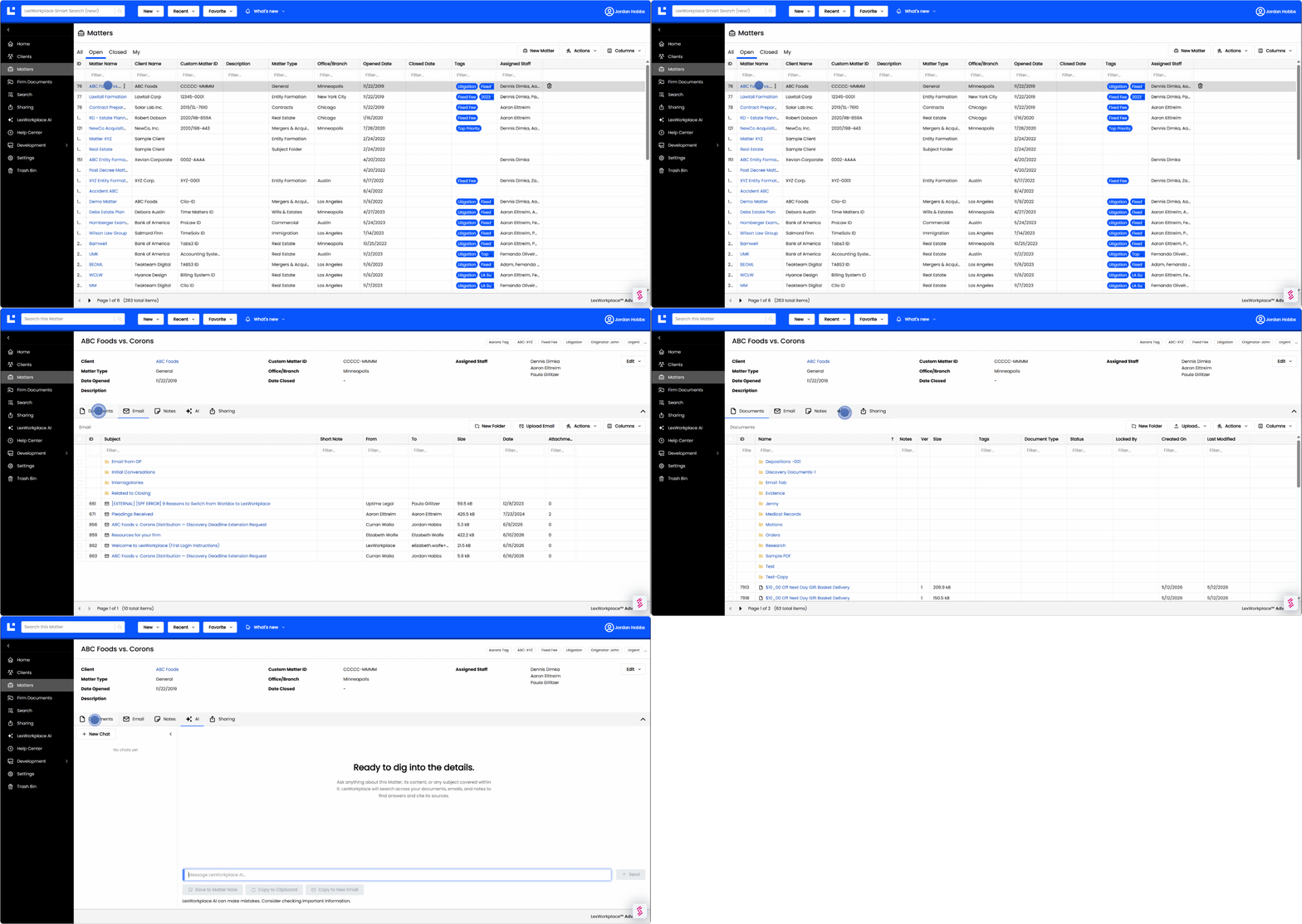
At its conception, and for many years after, Worldox was a powerful choice. Today, modern platforms rival or surpass it, and the difference is obvious the moment you compare them side by side. Take a look at LexWorkplace below to see how a modern DMS looks.
Reason #3: Data Security
Data security matters more now than ever, and Worldox isn’t encrypted or secure out of the box. To protect it, you have to layer on a separate cybersecurity strategy.
Geographic redundancy is part of that. Best practice is to avoid storing all your data in one place — you back it up to an offsite location and monitor it regularly. Worldox doesn’t make that easy, so the work falls to you and your IT provider.
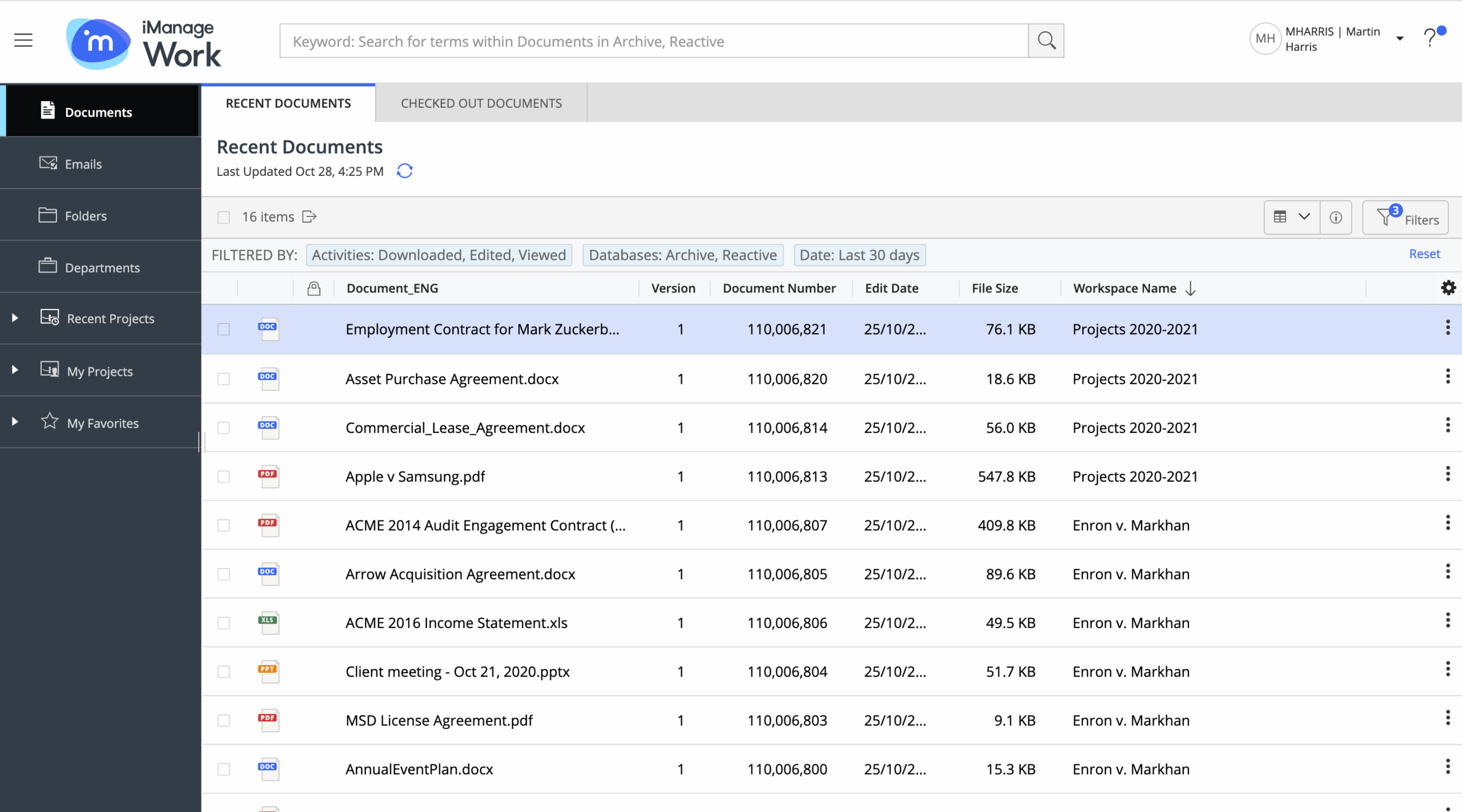
Once you’ve weighed the reasons to stay or go, you can decide whether Worldox still fits your firm. If you’re leaning toward a change, two alternatives come up most often:


What to Do If You’re Still on Worldox
If your firm still runs on Worldox, there’s no reason to panic and a clear reason to start planning. On-premise support ends December 31, 2026, so the real work now is choosing where you’ll land and giving yourself runway to migrate cleanly.
Take the time to compare your options against how your firm actually works, bring your team into the demos, and move before the deadline forces a rushed decision. The honest read on Worldox hasn’t changed — it’s a capable product reaching the end of its road.
WHAT’S NEXT
