
Is Your Legal Document Management Software a Dinosaur?

Still using outdated document management software? You’re not alone—but your firm may be falling behind.
A document management system (DMS) is central to how your firm stores, organizes, and secures its files. But legacy systems often lack the speed, security, and modern features today’s firms need.
In this article, we’ll explore the signs your DMS is stuck in the past, the risks that come with it, and what a modern solution should look like.
A Dinosaur DMS might make your company extinct. Evolve with the times, and find better success for your law firm. Read on!
Introduction
Most law firms rely on a document management system to keep their files organized—but not all systems are built for the demands of modern legal work.
Legacy platforms were designed in a different era: before hybrid work, before cloud adoption, and long before AI. As client expectations and compliance standards rise, these outdated systems are becoming a liability.
Today’s legal professionals need more than basic file storage. They need tools that help them find information quickly, collaborate across devices, and maintain airtight security. And increasingly, they need AI to streamline repetitive work and extract insight from documents.
This shift is reshaping what a document management system should be—and exposing the cracks in systems that haven’t kept up.
Related – Best Legal DMS: If you already know your DMS is outdated, move onto the decision making process. This article will help!
What Makes a DMS a Dinosaur?
Legacy document management systems might still “work”—but they weren’t built for the way law firms operate today. The gap between these outdated platforms and modern solutions grows wider each year, especially as cloud technology and AI reshape how legal professionals work.
If your firm is using a system with any of the following traits, it may be time for an upgrade:
On-Premise or Faux-Cloud Infrastructure
True cloud systems are accessible anywhere, on any device, without the need for VPNs or remote desktops.
If your team still connects to a server or uses a “hosted” workaround, you're not getting the flexibility or performance of the cloud.
Outdated, Clunky User Interface
Software that looks and feels like it belongs in the early 2000s can frustrate users and slow down daily tasks.
Clean, intuitive interfaces aren't just aesthetic—they improve usability and efficiency.
Limited or No Full-Text Search
Can you find a document by searching for a phrase inside it—or only by knowing exactly where it's stored?
Modern DMS platforms make the entire contents of your documents searchable.
Lack of Built-In Version Control
Without automatic version tracking, it’s easy to overwrite a colleague’s edits or lose the original.
Modern systems track every change and let you roll back as needed.
No Document Profiling or Tagging
Folder structures alone aren’t enough.
A modern DMS lets you organize files by client, matter, document type, or custom tags—making retrieval faster and more consistent.
Poor Compatibility Across Devices
If your system only works well on Windows, or doesn’t support mobile access, it’s out of step with how professionals work today.
High IT Overhead
If upgrades, backups, or even basic fixes require outside IT help, you’re likely spending more time and money than necessary.
Missing Advanced Features
Modern DMS platforms do more than store documents—they actively enhance how you work with them.
Tools like OCR (optical character recognition) make scanned documents fully searchable. AI features can summarize lengthy files, extract key details, and help you locate information using natural-language queries. Document comparison tools let you quickly identify changes between versions or similar files.
If your system lacks these capabilities, it’s not just outdated—it’s making routine work harder than it needs to be.
Bring AI to Your Legal Documents
LexWorkplace Includes:
- Interactive Document Conversations: Engage in a ChatGPT-like dialogue with LexWorkplace AI to discuss document contents and related subjects.
- Contextual Query Suggestions: Receive automatic, context-specific question prompts about any document, helping you delve deeper into its details.
- Seamless Integration and Saving: Click the AI icon to start discussions and easily save conversations as Matter Notes within LexWorkplace.
The Risks of Sticking with Legacy Software
Relying on outdated document management software comes with more than just day-to-day annoyances—it puts your firm at a strategic disadvantage.
From wasted time to serious security gaps, the risks are real and growing.
Productivity Losses That Add Up
Legacy systems often lack the tools firms now consider essential: full-text search, version control, email integration, and intuitive interfaces.
When basic tasks take longer than they should, the impact on your team’s output becomes impossible to ignore.
Security Weaknesses
Older DMS platforms typically miss out on modern security standards.
Without features like encryption, audit trails, and detailed access controls, sensitive client data is more exposed to breaches or mishandling.
Compliance Challenges
Meeting standards like HIPAA or the ABA’s Model Rules requires more than good intentions.
Without the ability to track file access, enforce permissions, or securely share documents, legacy systems can put firms at risk of noncompliance.
Remote Work Friction
Today’s hybrid legal teams need access from anywhere, on any device.
If your DMS still relies on VPNs or remote desktops, it's introducing delays, downtime, and frustration—especially for attorneys working in court, at home, or on the go.
Remote Work Friction
Today’s hybrid legal teams need access from anywhere, on any device.
If your DMS still relies on VPNs or remote desktops, it's introducing delays, downtime, and frustration—especially for attorneys working in court, at home, or on the go.
Falling Behind the Curve
Modern DMS platforms now include advanced tools—such as OCR, document comparison, and AI—to streamline workflows and surface critical information faster.
Adoption of these tools is accelerating: Clio’s 2025 Legal Trends Report found that 93% of mid-sized law firms now use AI in some capacity.
If your current system lacks these capabilities, your team isn’t just working harder than it needs to—you’re also falling behind firms that have already made the leap forward.
What to Expect from a Modern DMS
If your current system is holding you back, what should you look for in a better one? A modern DMS should do more than just check boxes—it should remove friction from your daily workflow and help your firm move faster, not harder.
Here’s what that looks like in practice:
Built for Legal Workflows
A legal DMS should organize documents, email, and notes by client and matter—not just folders and filenames. It should feel like it was built for a law firm, not retrofitted for one.
Find What You Need, Instantly
Look for full-text search and OCR that actually work—so you can find a contract clause, a scanned pleading, or an old email without guessing where it lives.
Streamline, Don’t Slow Down
Features like version tracking, email profiling, and document comparison should reduce manual tasks—not add new ones. A modern DMS quietly handles the details so your team can stay focused on legal work.
Advanced Tools, Built In
A forward-thinking DMS doesn’t bolt on AI or automation—it weaves them into the workflow:
- Ask natural-language questions to locate info inside documents
- Generate summaries to get up to speed fast
- Compare versions of a document without leaving your workspace
Support That Doesn’t Disappear
Even the best tools need help now and then. Make sure your vendor offers direct, responsive support—ideally from a team that understands the legal industry.
LexWorkplace Top Features
Cloud-based Document Management
- Secure Cloud Storage
- Client/Matter-Centric Org
- Full-Text Document Search
- Secure Client Sharing
- MS Office Add-In
- Email Management
- Windows + Mac Compatible
- Automatic, Integrated OCR
Case Study: The Law Offices of Ronald Canter
The Law Offices of Ronald Canter had been using a traditional on-premise file server for years. Like many firms, they outgrew the limitations of their system—but the signs didn’t show up all at once.
It started with small frustrations: organizing documents became time-consuming, remote access was unreliable, and managing files across multiple devices felt clunky. Over time, these pain points added up—impacting efficiency, collaboration, and overall workflow.
When the firm switched to LexWorkplace, the results were immediate and noticeable:
- All documents and email were organized by matter, accessible from anywhere
- Built-in versioning eliminated the risk of overwriting files
- Full-text search and OCR made it easy to locate information
- The transition off their file server was smooth and fully supported
As firm owner Ronald Canter put it:
“At that time, both our accounting system and our document storage systems were out of date. I needed a system that was reliable and user-friendly. And possibly more importantly, we needed a company that provided fast and effective support.”
This case is a clear example of how moving to a purpose-built, cloud-based DMS can solve long-standing issues—and give firms a more efficient, flexible way to manage their documents.
Closing the Loop
Is your legal document management software a dinosaur? If so, take a look at our Legal Document Management Comparison Chart and other resources to kick off your search for a suitable replacement for your law firm in the modern era.
Good luck!
Frequently Asked Questions
Look for telltale signs like clunky interfaces, limited or no search functionality, lack of version control, and reliance on local servers or VPNs. If your system lacks basic modern features like OCR, full-text search, or mobile access, it’s likely time for an upgrade.
Yes. Cloud-based systems offer secure, instant access from anywhere—without the maintenance burden of local servers. They’re also better suited for hybrid work, disaster recovery, and seamless software updates.
AI helps streamline legal work by offering features like natural-language search, document summarization, and insight extraction. These tools reduce time spent searching for information and help teams focus on higher-value tasks.
OCR (optical character recognition) makes scanned documents—like PDFs and faxes—fully searchable. Without it, important content is locked in image files, making it harder to locate or reference later.
Versioning ensures that every change to a document is tracked. It prevents users from overwriting each other’s work and allows teams to revert to previous versions when needed.
Yes. Features like audit trails, access permissions, and secure file sharing help firms meet regulatory requirements and client security demands—especially in industries like healthcare or financial services.
Basic cloud storage (like Dropbox or Google Drive) saves files. A DMS goes further: organizing content by matter, applying metadata, tracking changes, and integrating with tools like Outlook or Word.
It depends on the provider—but with the right partner, migration can be seamless. Many systems offer guided onboarding, data import tools, and live support to ensure minimal downtime.
Document comparison tools show the differences between two versions of a file—highlighting edits, deletions, and insertions. This is especially useful when reviewing contracts or pleadings.
Prioritize legal-specific features: matter-centric organization, full-text search, email integration, version control, and reliable support. Advanced tools like OCR and AI are increasingly important, as is compatibility across devices and operating systems.
Looking for Document Management Software?
LexWorkplace:
Modern Document Management for Law Firms
LexWorkplace is document & email management software, born in the cloud and built for law firms. Here’s a quick primer on how it works, or get your free trial to discover LexWorkplace for yourself.
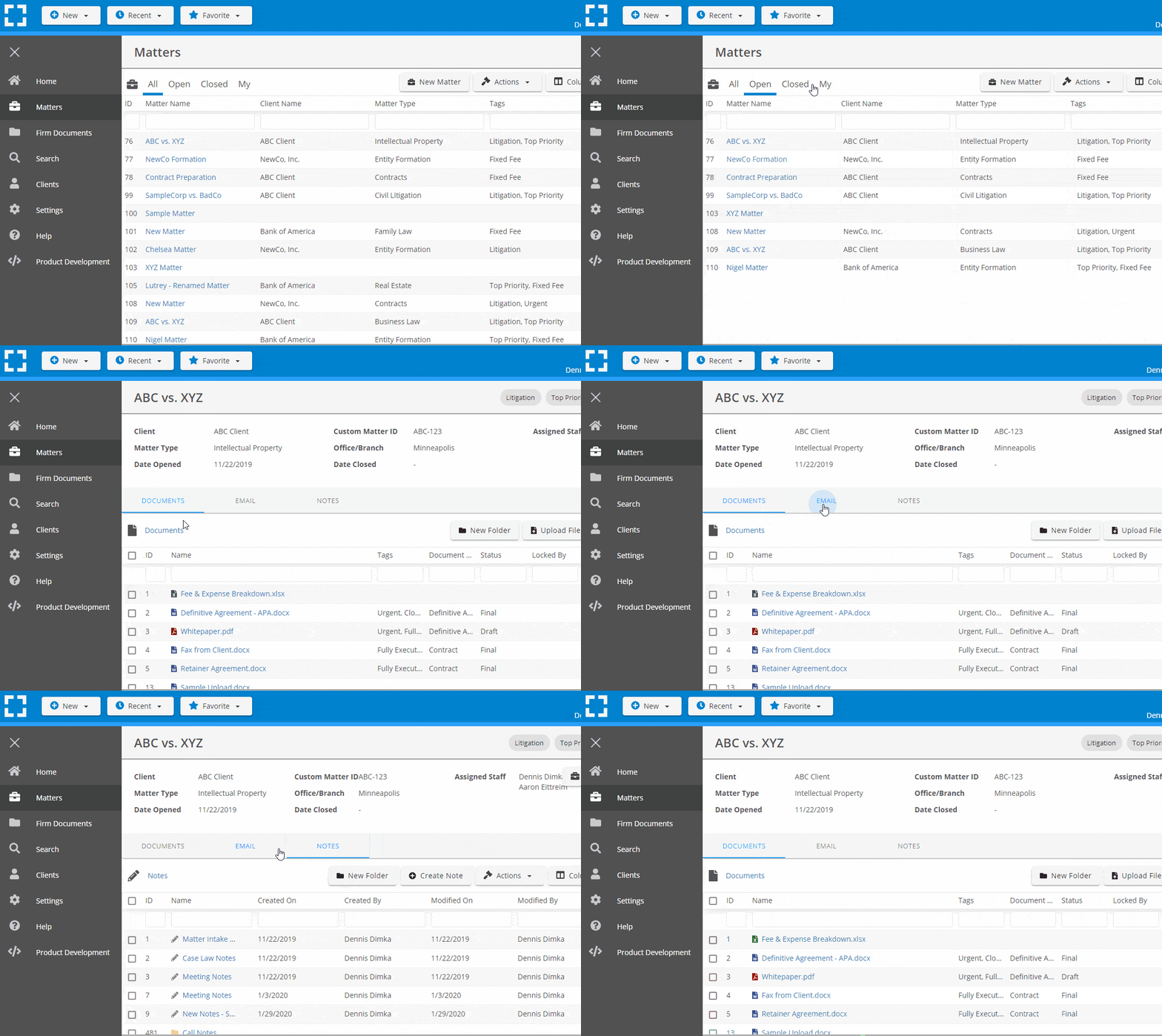
Organize by Client & Matter
Organize documents, email and notes by client or matter. Store and manage all data for a case or project in one place.
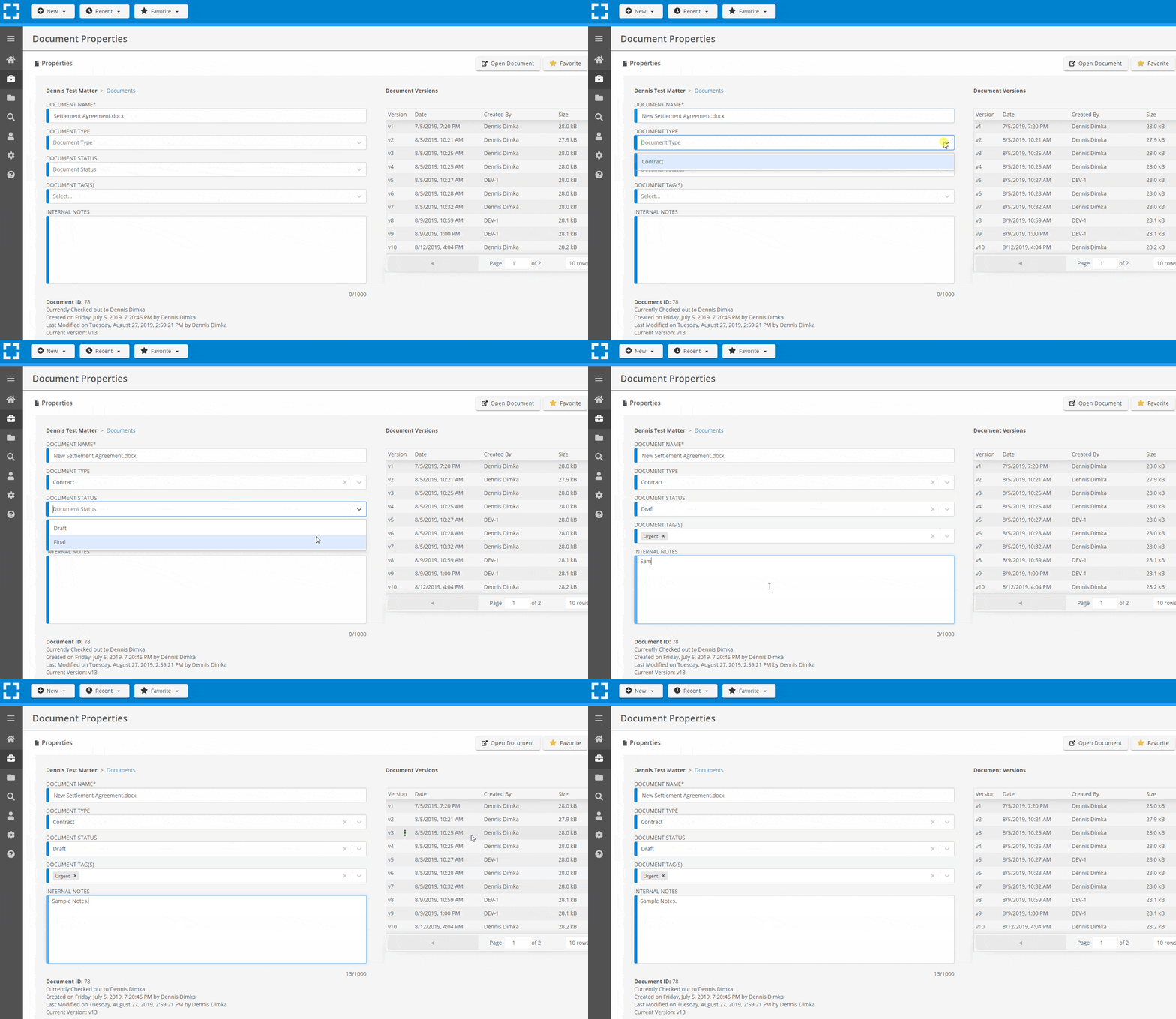
Go Beyond Basic Files & Folders
Supercharge your firm’s productivity with true DMS functions.
- Version Management
- Document Tagging & Profiling
- Document Check-Out / Check-In
- Microsoft Office Integration
- Automatic, Integrated OCR
- Convert Word Docs to PDF
Search Everything
LexWorkplace is like Google for your law firm. Search across millions of pages, documents, folder email and notes in seconds. Refine your search by matter, document type, author and more.
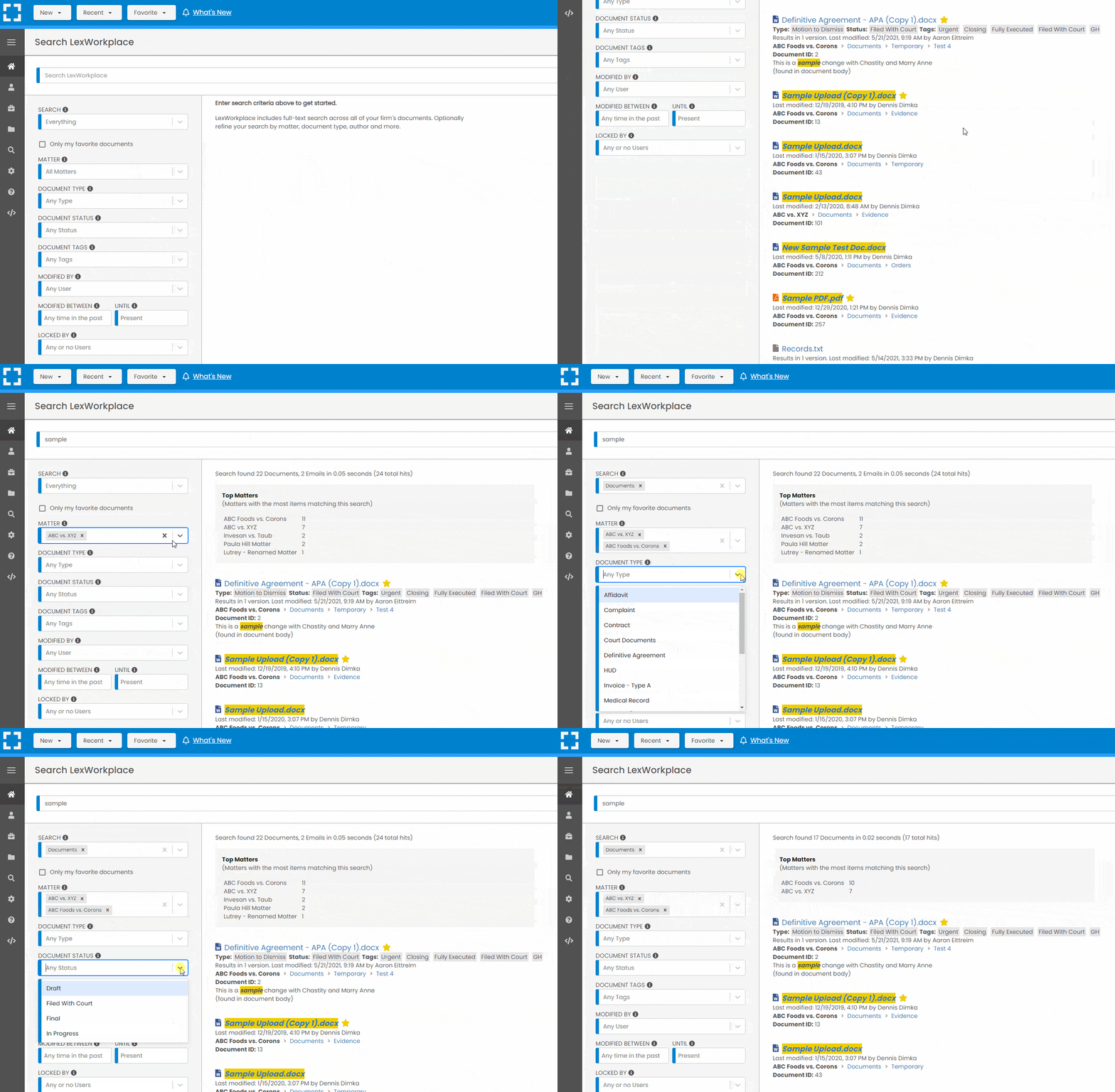
Search by…
- Client or Matter
- Document Type (Contract, Complaint, Order, etc.)
- Document Status (Draft, Final, etc.)
- Document Tags (Filed With Court, Fully Executed, etc.)
Outlook Integration + Comprehensive Email Management
Save emails to a matter without leaving Outlook. Saved emails are accessible to your entire team, organized and searchable.
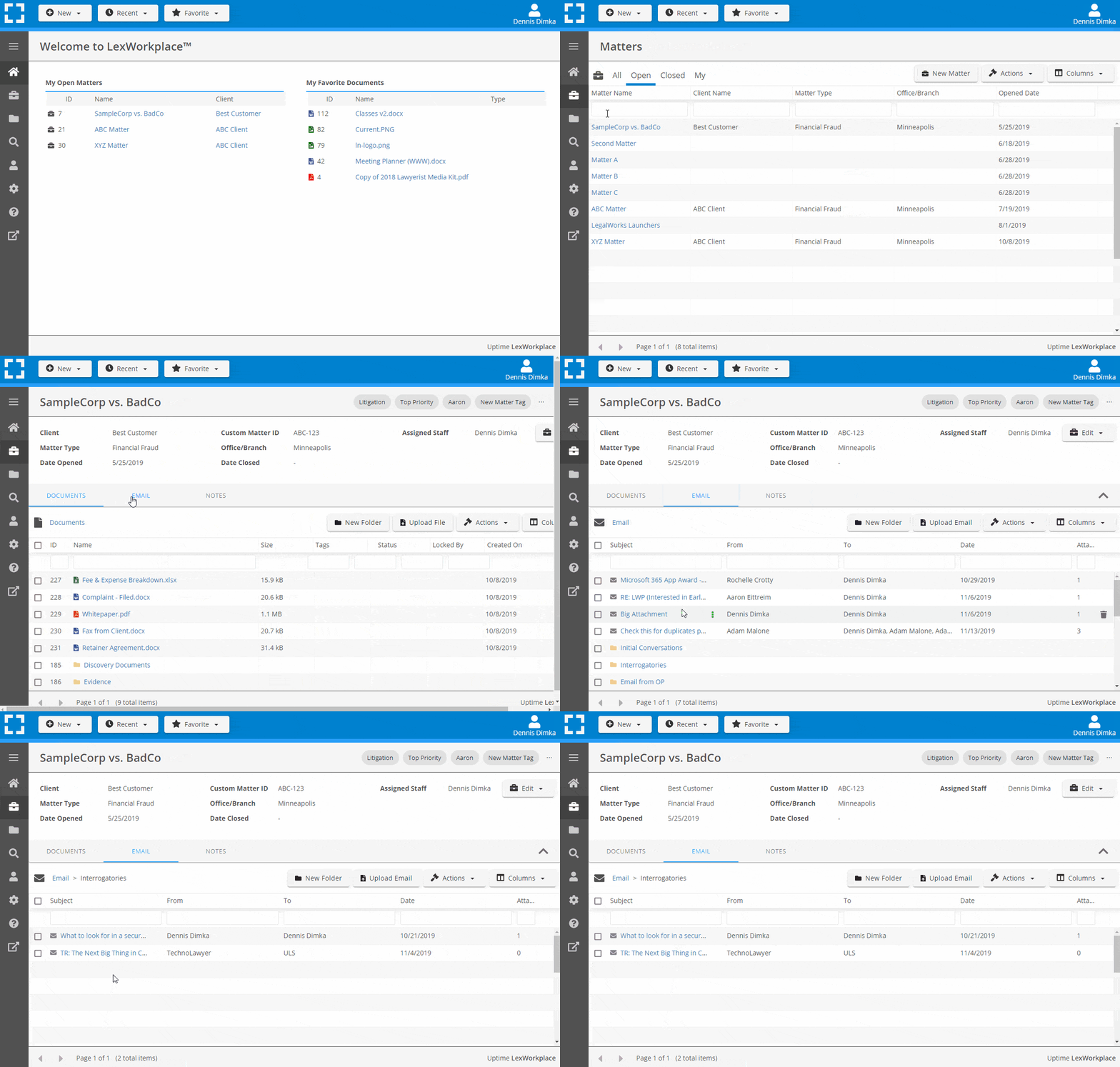
- Outlook Add-In that Works With Windows and Macs
- Save Entire, Original Email to a Matter in a LexWorkplace
- Email De-Duplication
- Organize Emails into Folders, Subfolders
Works with Windows and Macs
All of LexWorkplace is compatible with both Windows and Mac computers.
Next Steps
See What Clients Have to Say
Lawyers love LexWorkplace. See how the system streamlined one lawyer’s practice.

Watch the 5-Minute Demo
See LexWorkplace in action in our quick 5-minute overview and demonstration.
Or, if you want a one-on-one demo, or want to talk about LexWorkplace for your firm, schedule a call or demo below.
You Might Also Like
AI for Legal Documents: Top Tools Law Firms Use To Draft, Review, and Manage Faster
Struggling with slow legal document…

Why Law Firms Can’t Afford to Delay DMS Migration — And How to Switch Smoothly
Tired of costly, stressful tech…
Role-Specific Benefits of Document Management Software for Law Firms
Legal document management software…
Want More Legal Technology Tips?
Subscribe to Uptime Legal to get the latest legal tech tips and trends, delivered to your inbox weekly.