
Table of Contents
Managing documents accurately and efficiently is crucial.
Every word, every revision, and every change can have significant consequences. Version history in document management systems (DMS) is one feature that provides law firms with a reliable way to track, manage, and verify changes made to documents over time.
This article explores the importance of version history, focusing on how it helps prevent disputes and enhances collaboration within law firms.
Version history can be surprisingly important for law firms. Read on to understand the value of version history and how to make it work for you.
What is Version History?
Version history is a feature that allows users to track and manage changes made to a document over time.
For law firms, this capability is indispensable when it comes to ensuring accuracy, accountability, and transparency in document handling. It’s more than just a log of changes—it’s a snapshot of a document’s evolution, showing who made what changes, when those changes occurred, and why they were made.
In a legal setting, where precision and integrity are critical, version history becomes a vital tool. It allows lawyers and staff to revisit earlier iterations of a document, compare them with the most current version, and ensure that no important details have been overlooked or misrepresented. Whether it’s a simple update to a contract or a complex set of revisions to a legal brief, version history ensures everyone is on the same page—and, more importantly, that every change is recorded.
This feature isn’t just about keeping a record for the sake of compliance; it provides clarity during collaboration, helping teams avoid confusion about who made certain edits or when a decision was finalized. By leveraging version history, law firms can protect themselves from potential disputes, streamline their workflows, and maintain an organized, well-documented trail of their legal documents.
Let’s dive deeper into how version history can play a critical role in preventing disputes and fostering effective collaboration.
Preventing Disputes Through Version History
Disputes in law firms often arise from disagreements about document edits. Whether it’s over the wording of a contract, the omission of a critical clause, or confusion about what version was the most recent, these conflicts can result in wasted time, lost resources, and even reputational damage. Version history plays a critical role in preventing such disputes by providing an indisputable record of every change made to a document.
By using version history, law firms can quickly identify who made a specific change, when it occurred, and why it was made. This level of transparency helps resolve conflicts quickly. Imagine a situation where two attorneys disagree about the inclusion of a term in a legal agreement. Without version history, each party might accuse the other of making unauthorized edits.
However, with version history, the exact time and individual responsible for the change is clearly documented. This serves as a neutral third party, verifying the changes made and helping to clear up any confusion.
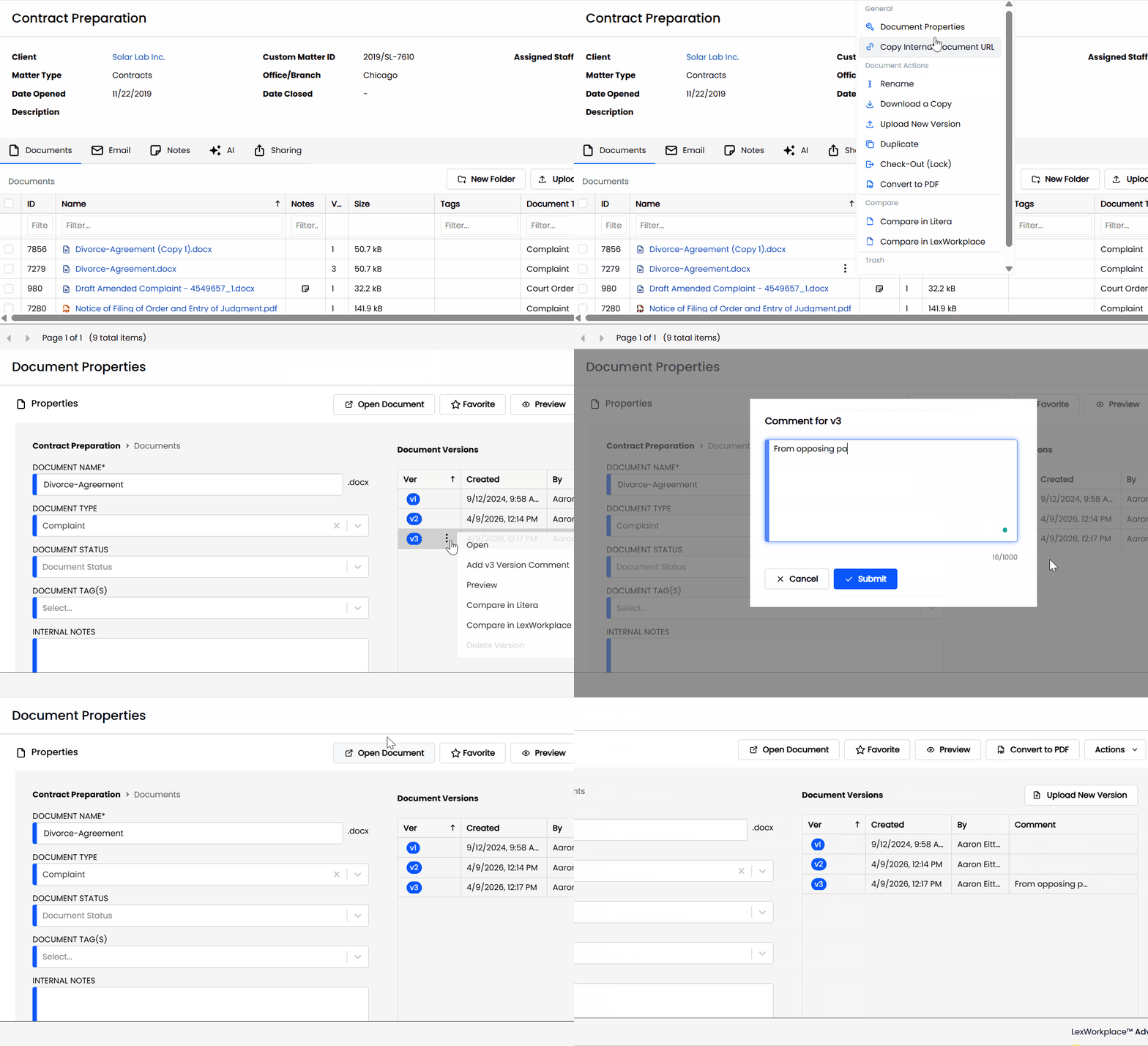
Moreover, version history offers the ability to revert to a previous version of a document. If a contentious edit leads to a dispute, law firms can restore the earlier version, ensuring that they’re working with the correct, agreed-upon content.
This minimizes the risk of errors going unnoticed, saving time and ensuring that everyone involved is on the same page.
For law firms, where the stakes are high and mistakes can be costly, version history is more than just a convenience—it’s a safeguard. It provides a layer of accountability, making it easier to trace back to the source of any issues, thus avoiding prolonged disputes and offering a clear, verifiable trail of document changes.
The Legal Perspective: Why Version History Matters in Law Firms
Precision and transparency are non-negotiable.
Law firms must maintain a clear and traceable record of document changes to uphold the integrity of their work and comply with industry regulations. Version history is a critical tool in achieving both.
For one, many legal regulations demand that firms keep detailed records, especially for contracts, agreements, and filings. Version history ensures that all edits are logged and easily retrievable if needed for compliance audits or legal reviews. This clear trail of documentation helps prevent disputes regarding document integrity and provides proof of due diligence when verifying document changes.
Additionally, version history supports law firms in adhering to best practices for document security and retention. It provides a built-in method to protect sensitive data by capturing each version’s edits and ensuring they’re properly stored throughout the document’s lifecycle. If questions arise about how a document was altered or by whom, version history offers the transparency needed to resolve such issues quickly and efficiently.
In short, version history serves as a cornerstone for compliance and security in law firms, offering both peace of mind and accountability for every document processed.
Streamlining Collaboration
Collaboration is a fundamental aspect of legal work. Lawyers, paralegals, and other staff members often need to work together on complex documents, which can involve multiple rounds of revisions, feedback, and approvals.
In such an environment, it’s crucial that everyone is working from the most up-to-date version of a document. Version history simplifies this process by keeping track of every modification and making sure team members aren’t accidentally working with outdated information.
Consider a scenario where several attorneys are drafting a new contract.
Each attorney might be responsible for a different section of the document, and they all need to review the changes made by others to ensure the contract remains consistent and accurate.
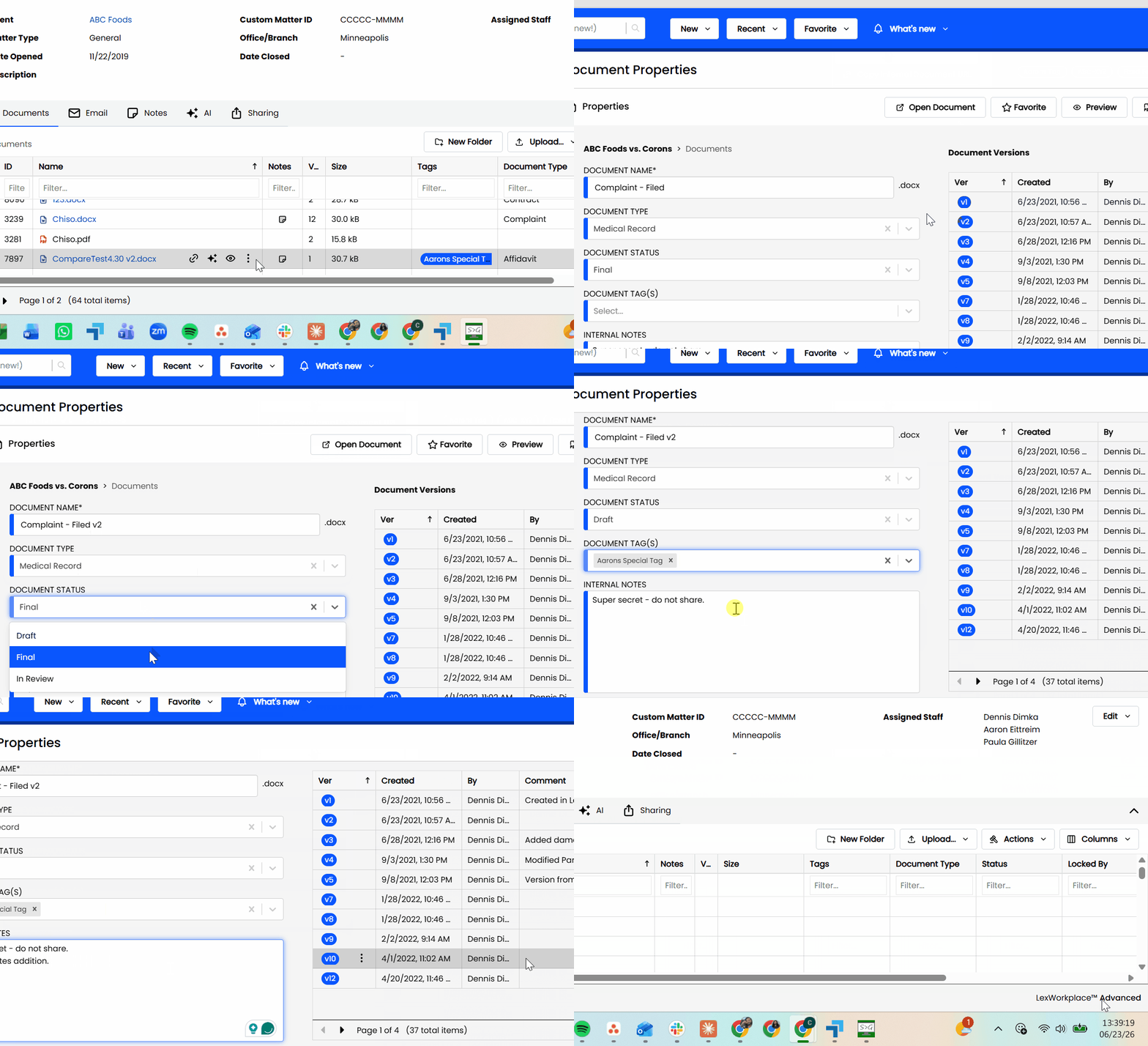
Without version history, there’s a risk that one attorney might overlook a revision made by another, leading to confusion or even errors in the final document. Version history ensures that every change is documented, so everyone can see exactly what has been added, removed, or modified. This allows the team to stay in sync and avoid working on multiple versions of the same document, which could slow down the process or create confusion.
Ultimately, version history ensures that legal teams can work efficiently and effectively together.
Version History: How It Varies Between Document Management Systems (DMS)
Not all document management systems (DMS) are created equal when it comes to version history.
While many DMS solutions offer basic version tracking, the depth and functionality can vary significantly. Understanding how version history is implemented in different systems is essential for law firms to choose the right tool for their needs.
In some DMS platforms, version history is as simple as tracking the last few edits, without providing much detail on what specifically was changed or who made the modifications. This can lead to confusion and hinder accountability, especially in complex legal documents that undergo multiple rounds of revision.
On the other hand, more advanced systems like LexWorkplace provide a detailed, user-friendly version history.
These systems not only track each change made to a document but also capture information on who made the change, when it occurred, and the nature of the edit. This level of detail ensures that teams can easily identify and revert to previous versions, making the process of collaboration smoother and more transparent.
For law firms, the difference is crucial. A basic version history system might suffice for general business use, but legal professionals need the certainty that comes with a thorough, accessible version history. In LexWorkplace, for example, users can see a complete timeline of document revisions, which allows for quick identification of critical changes and prevents misunderstandings between team members. This level of detail is especially important when dealing with sensitive client documents or legal agreements, where accuracy and accountability are paramount.
When selecting a DMS, law firms should consider the extent of version history features available. The more comprehensive and transparent the system, the better equipped the firm will be to handle complex legal workflows and ensure the integrity of its documents.
Version History Checklist for Law Firms
By evaluating your DMS with this checklist, you can ensure that the version history feature aligns with your firm’s needs, providing both transparency and control over your legal documents.
WHAT’S NEXT